Zoned In: Why One Thermostat Will Never Be Enough for London's Mixed-Use Homes
One Building, Several Climates
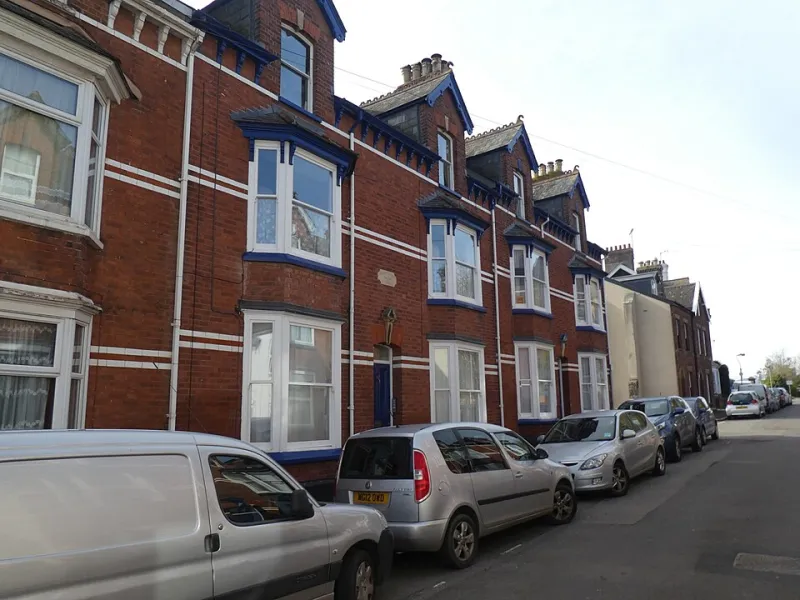
Walk down almost any high street in Islington, Clapham, or Ealing and you will see the same pattern repeating: a café or shop occupying the ground floor, flats above, and — since 2020 — a growing number of those flats doubling as full-time workspaces. A single building is now expected to serve as a retail environment, a family home, and an office, often simultaneously.
Yet the heating and cooling systems in many of these properties were designed for a simpler era. One boiler, one thermostat, one set of radiators, all responding to a single temperature reading in a single room. The result is a building that is frequently too warm in one zone and too cold in another, with the occupant — or occupants — paying for heat nobody is using.
The Problem with a Single Point of Control
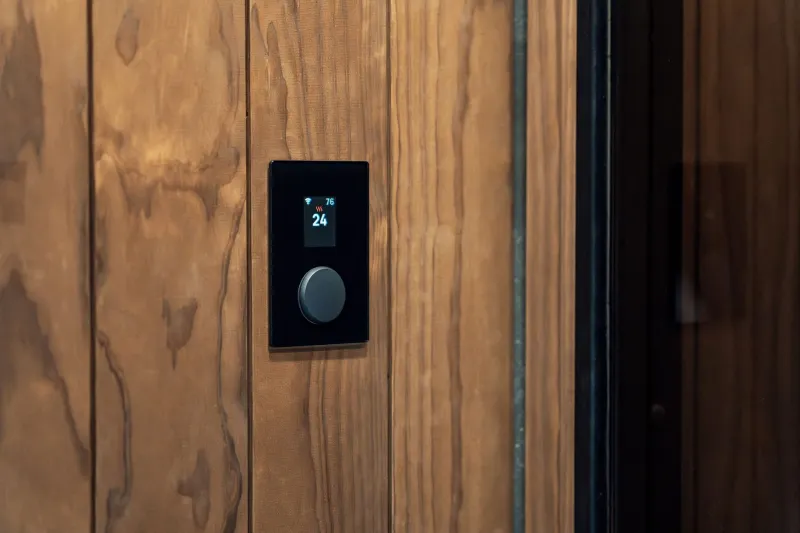
A thermostat measures temperature exactly where it is placed. In a mixed-use London terrace, that reading might come from a draughty hallway while the top-floor home office bakes in afternoon sun and the ground-floor commercial space sits empty and overheated.
The consequences are familiar to anyone who has lived or worked in such a building:
- Radiators running at full output in rooms nobody occupies
- Windows opened in winter to dump excess heat — the most expensive ventilation strategy in existence
- Disputes between commercial tenants and residential leaseholders over shared heating costs
- Heat pumps and boilers short-cycling because they cannot modulate against a single, unrepresentative demand signal
For homes converted into houses in multiple occupation, the problem compounds. Each occupant has different comfort thresholds and schedules, but the system treats the building as one homogeneous block.
What Zoning Actually Means
Zoned heating and cooling divides a property into independently controlled areas, each with its own thermostat or sensor and its own means of regulating flow. In practice this usually involves:
Motorised zone valves on the pipework, allowing the boiler or heat pump to serve one circuit at a time — upstairs and downstairs, for example, or commercial and residential floors.
Individual TRVs or smart radiator heads in each room, closing off heat where it is not required.
Ducted or ductless cooling zones, increasingly relevant as London summers intensify, allowing a living room to be cooled in the evening without chilling an empty bedroom.
A central control system — often app-based — that coordinates the zones, learns occupancy patterns, and prevents one zone's demand from dragging the whole system into unnecessary operation.
Done properly, zoning transforms a building from a single blunt instrument into a set of responsive, right-sized environments.
The Retrofit Reality in Older London Stock
Victorian and Edwardian terraces present particular challenges. Solid brick walls, suspended timber floors, and pipework that has evolved over decades of ad-hoc extensions mean zoning is rarely a straightforward job.
Pipework routing is the first hurdle. Existing two-pipe systems may need reconfiguration to allow independent circuits, and access for running new supplies can be limited in occupied properties. Wireless motorised heads and radio-controlled thermostats have made this considerably easier in recent years, but a competent design survey remains essential — particularly where the ground floor is a commercial unit with its own heat load profile.
Insulation is the second. Zoning works best when each zone holds its temperature; in a poorly insulated terrace, heat migrates between rooms through party walls and unlagged floors, blunting the savings. We always assess fabric performance before specifying a zoned system, because controlling heat you cannot retain is a losing battle.
Finally, there is the heat source. A system designed around a gas combi boiler will zone differently from one built around an air source heat pump, which benefits enormously from zoned demand because it allows the unit to modulate at low output rather than cycling. With heat pumps now central to London's decarbonisation agenda, zoning is arguably a prerequisite rather than a luxury.
When the Investment Pays Back
Zoning is not free. A typical residential retrofit — smart heads, zone valves, controls, and commissioning — will run to a four-figure sum, more if significant pipework changes are needed. So when does it justify itself?
Large or multi-level properties. The larger the temperature and occupancy differences between floors, the greater the waste being eliminated.
Mixed commercial-residential buildings. Where a shop or studio operates on different hours from the flat above, independent scheduling routinely delivers the fastest returns.
Homes with home offices. Heating one occupied room for eight hours rather than the entire house is a material saving across a London winter.
Heat pump installations. Zoned demand allows lower flow temperatures and longer, efficient running cycles — often the difference between a heat pump that performs and one that disappoints.
In our experience, well-designed zoned systems in suitable London properties typically reduce heating consumption by fifteen to thirty per cent, with payback periods of three to seven years depending on usage patterns and the existing system's inefficiency.
Control Is the Starting Point
London's housing stock is being asked to do more than ever before — work, rest, trade, and rent under one roof. A single thermostat asking a Victorian terrace to behave as one uniform space is a design failure hiding in plain sight.
Zoning is not about gadgets. It is about matching heat and cooling precisely to how a building is actually used, room by room and hour by hour. For London's mixed-use homes, that is fast becoming the baseline, not the upgrade.