Hidden in the Walls: How Victorian Terrace Architecture Is Quietly Harming the Health of London Residents
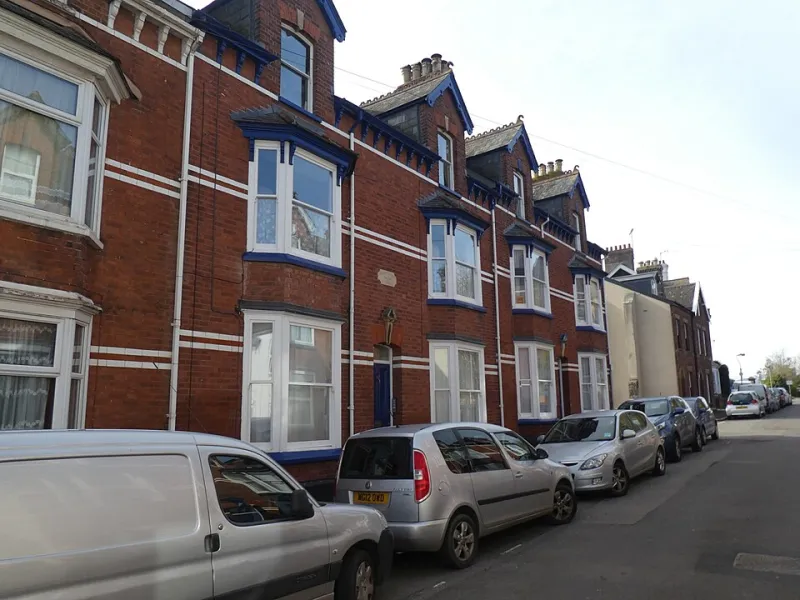
Photo: David Smith , CC BY-SA 2.0, via Wikimedia Commons
A City Built for a Different Era
London's Victorian terraced houses are among the most recognisable and beloved architectural features of the capital. Stretching across boroughs from Hackney to Hammersmith, these red-brick properties carry considerable charm and, for many families, represent a significant financial investment. What they also carry, less visibly, is an inherent vulnerability to poor air circulation — one that becomes increasingly dangerous as modern insulation standards are applied to buildings that were never engineered to receive them.
When Victorian builders constructed these homes in the latter half of the nineteenth century, natural ventilation was essentially built into the design. Draughty sash windows, open fireplaces, suspended timber floors with gaps between boards, and relatively modest internal temperatures all conspired to keep air moving. The home breathed, albeit inefficiently. Today, those same properties have been double-glazed, draught-proofed, loft-insulated, and cavity-filled — all improvements on paper, but collectively, they have sealed out the very air movement that once kept moisture at bay.
The Condensation Trap
The consequences of this transformation are playing out in homes across London, often without residents recognising the true source of the problem. Condensation forms when warm, moisture-laden air meets a cold surface — a bathroom wall, a north-facing bedroom window, or the inside of an external corner. In a well-ventilated home, that moisture is carried away before it settles. In a sealed Victorian terrace, it has nowhere to go.
The visible result is often black mould: patches behind wardrobes, along skirting boards, around window frames, and in the corners of rooms that receive little direct sunlight. Many residents attempt to manage this with surface sprays or by repainting affected areas, treating a symptom while the underlying cause continues unchecked. Others assume the property simply has a damp problem rooted in the building fabric itself — and spend considerable sums on waterproofing treatments that offer little lasting benefit.
What is less visible, and considerably more concerning, is the impact on the air that the occupants are breathing every day.
A Health Crisis in Plain Sight
The relationship between indoor mould and respiratory health is well established in clinical literature. Mould spores, once airborne, can trigger or exacerbate asthma, cause allergic rhinitis, and in vulnerable individuals — children, the elderly, and those with pre-existing respiratory conditions — contribute to more serious complications. The NHS has repeatedly highlighted damp and mouldy housing as a significant public health concern, particularly in urban areas where housing stock is older and population density is higher.
Consider a family in a Victorian mid-terrace in Lewisham. Following insulation upgrades carried out under a government energy efficiency scheme, they began to notice persistent condensation on their bedroom windows each morning. Within six months, mould had appeared in the corners of two bedrooms and behind the bath panel. Their youngest child, previously healthy, developed a recurring cough that their GP initially attributed to a viral infection. It was only when a surveyor flagged the mould during a remortgage inspection that the connection was made.
This scenario is not unusual. It is, in fact, remarkably common — and it is one that London Nitro Heating & Cooling encounters regularly when called to properties where residents report vague discomfort, persistent respiratory symptoms, or escalating energy bills despite recent upgrades.
Why Standard Solutions Fall Short
The instinctive response to a ventilation problem in an older property is often to install an extractor fan in the bathroom and kitchen and consider the matter resolved. In a modern, purpose-built flat, this may be sufficient. In a Victorian terrace, it rarely is.
The challenge lies in the whole-house nature of the problem. Moisture is generated throughout the property — by cooking, bathing, respiration, and even houseplants — and it migrates through the building, concentrating wherever air movement is weakest. Addressing only the highest-moisture rooms does not resolve the underlying circulation deficit; it merely reduces one source of input while others continue unchecked.
What these properties genuinely require is a considered, whole-home ventilation strategy. Mechanical Ventilation with Heat Recovery (MVHR) systems, for example, provide continuous, controlled air exchange across the entire dwelling, extracting stale, moisture-laden air from wet rooms while simultaneously supplying filtered fresh air to living and sleeping spaces. Crucially, the heat from outgoing air is recovered and used to warm incoming air, meaning the system does not compromise the thermal efficiency that insulation upgrades were designed to deliver.
Retrofitting Without Compromising Character
One concern that homeowners in period properties frequently raise is the visual and structural impact of introducing modern mechanical systems. It is a legitimate consideration. Victorian terraces often carry permitted development restrictions, and in conservation areas or listed buildings, any intervention must be handled with care.
The good news is that contemporary MVHR and ventilation systems have evolved considerably in terms of their physical footprint. Ducting can be routed through existing voids, concealed within boxing that mirrors original architectural details, or run beneath floorboards where the suspended floor construction of Victorian properties often provides a natural pathway. Terminals and grilles are available in profiles and finishes that sit sympathetically within period interiors.
London Nitro's approach to these installations begins with a thorough assessment of the property's existing air movement patterns, moisture sources, and structural constraints. No two Victorian terraces are identical in their layout or their ventilation challenges, and a solution designed for one will rarely translate directly to another. The survey process identifies the most efficient routing for ductwork, the appropriate system capacity for the dwelling's volume and occupancy, and any heritage or planning considerations that must be observed.
Taking Action Before the Damage Deepens
For London residents living in Victorian or Edwardian properties, the message is a straightforward one: if you have invested in energy efficiency measures over recent years, it is worth assessing whether those measures have inadvertently reduced your home's natural ventilation capacity. The signs — persistent condensation, recurring mould, musty odours, or unexplained respiratory symptoms — are worth taking seriously rather than managing around.
Modern climate control solutions can address these issues comprehensively, without dismantling the character that makes these properties so desirable in the first place. The goal is not to transform a Victorian terrace into something it is not, but to ensure that the people living within it can do so in genuine comfort and health.
London Nitro Heating & Cooling specialises in exactly this kind of sensitive, technically rigorous retrofit work. If your home is showing the signs described above, we would encourage you to seek a professional assessment before the problem deepens further.