When the Cooling Stops: The Mounting Risk to London's Data Centre Infrastructure
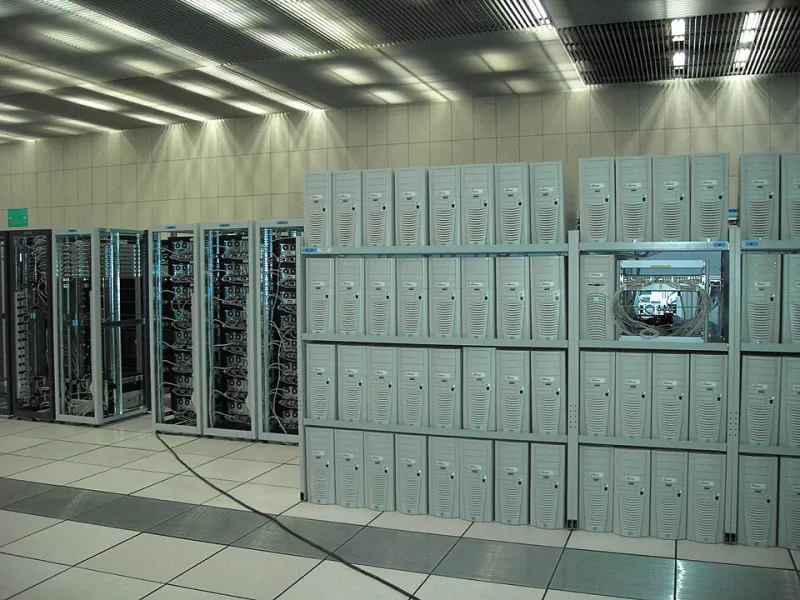
Photo: Faber, CC BY-SA 2.0, via Wikimedia Commons
London is, by most measures, one of the most significant data centre markets in Europe. The concentration of financial services, media, technology firms, and public sector digital infrastructure within the M25 has created a demand for colocation and hyperscale facilities that shows no sign of abating. Docklands alone houses a density of data centre capacity that would be remarkable in any global city. Yet behind the reinforced doors and biometric entry systems, a less visible challenge is accumulating: the cooling infrastructure keeping these facilities operational is, in many cases, ageing, under-maintained, and increasingly mismatched to the thermal loads being asked of it.
The consequences of getting this wrong are not abstract. They are measured in minutes of downtime, millions of pounds in lost revenue, and—in the most serious cases—irreversible hardware damage that cascades across interconnected systems.
The Thermal Arithmetic Is Changing
For much of the past two decades, data centre cooling was designed around relatively predictable heat densities. A standard rack might generate 3–5 kilowatts of heat. Cooling systems were sized accordingly, with redundancy built in to accommodate modest fluctuations. That arithmetic has changed substantially.
The proliferation of GPU-intensive workloads—driven by artificial intelligence, machine learning, and high-frequency financial processing—has pushed rack densities well beyond legacy design assumptions. Densities of 20–40kW per rack are no longer unusual in modern deployments, and some specialist installations exceed that considerably. Cooling infrastructure that was engineered for a different era of computing is now being asked to manage thermal loads it was never intended to handle.
This is not a problem that resolves itself through incremental adjustment. It requires systematic reassessment of cooling capacity, airflow management, and redundancy architecture—work that is frequently deferred in favour of more immediately visible capital expenditure.
Redundancy That Exists Only on Paper
The data centre industry has long used tiered classification systems to communicate resilience levels. A Tier III facility, for instance, is designed to allow maintenance of any component without taking the system offline. A Tier IV facility theoretically tolerates any single failure without impacting operations. These classifications are meaningful—but they describe design intent, not operational reality.
Redundancy in cooling systems degrades over time. Backup chillers that have not been tested under load conditions may fail precisely when they are called upon. Cooling distribution units with ageing compressors may trip on thermal overload during a summer peak. Economiser systems that have not been serviced since installation may fail to transition correctly when ambient temperatures rise. The gap between documented redundancy and actual resilience is often substantial, and it is a gap that only rigorous, regular testing and maintenance can close.
London's climate adds an additional dimension to this challenge. While the city is not prone to the extreme heat events seen in southern Europe, the summers of 2019 and 2022 demonstrated that ambient temperatures capable of stressing data centre cooling systems are no longer exceptional occurrences. Facilities that were designed with conservative external temperature assumptions are increasingly operating closer to their thermal margins than their engineers originally anticipated.
Regulatory Pressure Is Intensifying
The regulatory environment surrounding data centre operations in the United Kingdom is evolving. The Network and Information Systems (NIS) Regulations impose obligations on operators of essential digital infrastructure to manage security risks—and cooling failures that cause extended outages are squarely within scope. The Financial Conduct Authority's operational resilience framework places explicit expectations on financial services firms regarding the continuity of critical systems, including the physical infrastructure that supports them.
Beyond compliance, the reputational dimension is significant. A major cooling failure at a London colocation facility does not affect only the operator—it affects every client whose infrastructure is hosted there. In an environment where enterprise clients are increasingly demanding transparency about physical resilience as part of their due diligence processes, demonstrable investment in cooling infrastructure is becoming a commercial differentiator, not merely a technical obligation.
The Case for Intelligent, Proactive Maintenance
The traditional approach to data centre cooling maintenance has been largely reactive: respond to failures, replace components when they break, and conduct periodic inspections that confirm the visible condition of equipment without stress-testing its operational performance. This approach is inadequate for the criticality of the environments it is meant to protect.
Intelligent, proactive maintenance begins with comprehensive baseline monitoring. Temperature and humidity sensors distributed throughout the white space, combined with real-time analytics, can identify developing anomalies—hotspots, airflow imbalances, efficiency degradation in cooling units—before they escalate into failures. Predictive maintenance programmes, informed by performance data rather than calendar intervals, allow interventions to be scheduled at operationally convenient times rather than in response to emergencies.
Airflow management deserves particular attention. Poorly managed airflow—mixing of hot and cold aisles, bypass air circumventing IT equipment, inadequate containment—is one of the most common and most correctable sources of cooling inefficiency in operational data centres. An expert assessment of airflow patterns can identify opportunities to improve thermal performance without significant capital expenditure, often extending the effective life of existing cooling infrastructure.
London's Digital Infrastructure Deserves Better
There is a tendency within the data centre sector to treat cooling as a utility—necessary, unglamorous, and best managed at minimum cost. This perspective is difficult to sustain when the consequences of failure are examined honestly. The financial exposure from a single significant cooling incident—hardware replacement, data recovery, contractual penalties, reputational damage—routinely dwarfs the cost of the maintenance programme that could have prevented it.
London's position as a European technology hub is not guaranteed. It is maintained by the reliability of the infrastructure that underpins it. Cooling systems are not peripheral to that reliability—they are foundational to it.
At London Nitro Heating & Cooling, we work with commercial and enterprise clients to assess, maintain, and where necessary redesign the climate control infrastructure their operations depend upon. In environments where the cost of failure is measured in more than discomfort, precision cooling is not a luxury. It is a prerequisite.