What Your Energy Bills Aren't Telling You: The True Cost of Ageing Heating Systems in London's Commercial Buildings

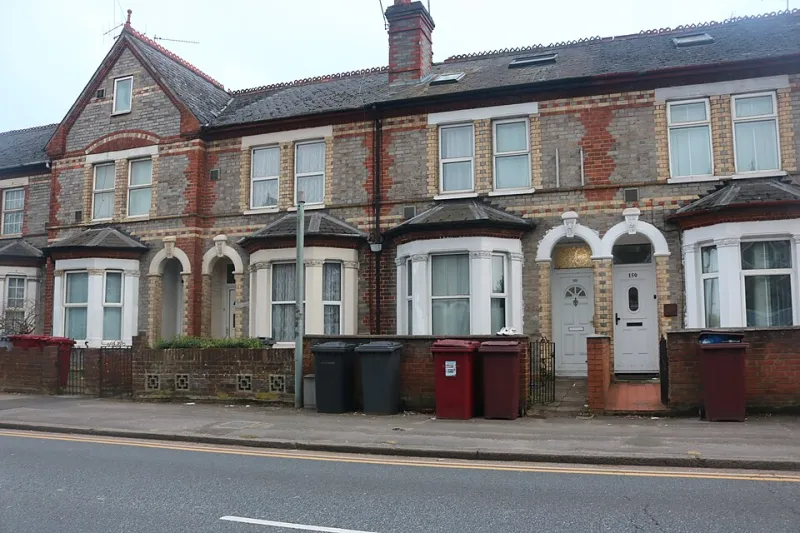
Photo: Moheen Reeyad, CC BY-SA 4.0, via Wikimedia Commons
For many London business owners and facilities managers, the monthly energy bill is accepted as an unavoidable overhead — a fixed cost of doing business in one of the world's most expensive cities. Yet a significant proportion of what commercial properties pay in heating costs each year is not inevitable. It is waste. Measurable, preventable, and increasingly difficult to justify in a climate where operational efficiency is under greater scrutiny than ever before.
The uncomfortable truth is that a large share of London's commercial building stock — from Victorian terraces repurposed as offices in Clerkenwell to post-war retail units across Croydon and Lewisham — continues to rely on heating systems that were designed and installed under entirely different energy pricing conditions. What was considered adequate performance a decade or two ago bears little resemblance to what modern climate control technology is capable of delivering today.
The Anatomy of an Inefficient System
Heating inefficiency in commercial settings rarely announces itself dramatically. There is no single moment of failure. Instead, it accumulates quietly — in boilers running longer than necessary to reach target temperatures, in poorly zoned systems heating unoccupied meeting rooms at full capacity, in heat escaping through poorly insulated pipework before it ever reaches the spaces it was intended to serve.
A useful way to understand this is through the concept of system efficiency rating. A boiler installed in the mid-2000s may carry an efficiency rating of 78–82%, meaning that for every pound spent on gas, up to 22p is lost before it generates any usable heat. Contemporary condensing boilers, by contrast, routinely achieve efficiencies above 92%, and when paired with intelligent building management systems (BMS), the effective performance gap widens further still.
The consequences compound over time. A mid-sized commercial office in Central London consuming £3,000 per month in heating costs during winter months may, conservatively, be wasting between £600 and £900 monthly due to system inefficiency alone. Across a full heating season, that figure becomes significant — and it does not account for the additional maintenance costs associated with ageing equipment that requires increasingly frequent servicing.
What Energy Audits Are Revealing
At London Nitro Heating & Cooling, our technical assessments of commercial properties consistently surface patterns that surprise even experienced property managers. One recurring finding involves heating systems that have never been properly commissioned for their current use. A building that was once a single-occupancy office and has since been subdivided into multiple tenancies, for example, may still be operating on the original heating schedule and zone configuration — one designed for a completely different occupancy model.
In one recent audit of a four-storey commercial building in Islington, our engineers identified that approximately 35% of total heating output was being directed to spaces outside occupied hours. The building's BMS had not been updated since a change of tenancy three years prior. A relatively modest investment in recommissioning the controls and installing occupancy-linked scheduling resulted in a projected annual saving of just under £14,000 — with a full payback period of under eighteen months.
In another case, a retail property in South London was found to be operating two separate heating circuits at conflicting settings, a legacy of an incremental system expansion that had never been properly integrated. The result was simultaneous heating and cooling in adjacent zones — an inefficiency so counterproductive it bordered on the absurd, yet one that had gone undetected for years.
The ROI Case for Modernisation
The financial argument for upgrading commercial heating infrastructure has strengthened considerably in recent years, driven by three converging factors: rising energy prices, improved technology, and more accessible financing options for capital improvements.
Modern heat pump systems, high-efficiency condensing boilers, and intelligent zoning solutions are now capable of delivering verified energy savings in the range of 20–40% compared with legacy installations. When these savings are modelled against current commercial energy tariffs — which, even following recent volatility, remain substantially higher than pre-2021 levels — the return on investment timeline has shortened considerably.
A well-specified system upgrade for a commercial property with annual heating costs of £30,000 might require an upfront investment of £18,000–£25,000 for equipment and installation. At a conservative saving rate of 25%, the annual reduction in energy spend equates to £7,500. Full capital recovery within three to four years is, in many cases, a realistic expectation — and the useful life of modern commercial heating equipment typically extends well beyond twenty years.
It is also worth noting that energy performance is increasingly relevant to commercial property valuations and lease negotiations. Under the UK's evolving Minimum Energy Efficiency Standards (MEES) regulations, landlords face growing legal and reputational exposure if their properties cannot demonstrate adequate energy performance. Heating system efficiency is a significant component of any EPC assessment, and the direction of regulatory travel is clear.
Recognising the Warning Signs
For facilities managers and property owners uncertain whether their current systems warrant closer examination, several indicators merit attention. Heating bills that have increased year-on-year without a corresponding rise in occupancy or usage suggest declining system performance. Uneven temperatures across different areas of a building — hot near the boiler plant, cold at the perimeter — point to distribution inefficiencies. Frequent boiler callouts, particularly during the winter months, are rarely isolated incidents; they are typically symptomatic of a system operating beyond its reliable service life.
A formal energy audit, conducted by qualified HVAC engineers, provides the clearest picture. It quantifies current consumption, identifies specific inefficiencies, and models the financial impact of targeted interventions — giving property owners the information they need to make properly informed investment decisions.
Heating Efficiency as a Business Imperative
The framing of heating system upgrades as a luxury or a purely reactive expenditure has become increasingly difficult to sustain. In a commercial environment where margins are scrutinised and operational costs are subject to constant review, allowing thousands of pounds to leak through an inefficient heating plant each year represents a strategic failure — one that is entirely addressable.
London's commercial property sector operates within a demanding financial and regulatory context. The businesses and landlords who will navigate that context most effectively are those who treat climate control not as a building services afterthought, but as a core component of operational performance. The technology to achieve meaningful, measurable improvement exists. The financial case is compelling. The question is simply whether the true cost of inaction has been properly accounted for.