Breathing Room: Why London Businesses Can No Longer Afford to Ignore Office Air Quality
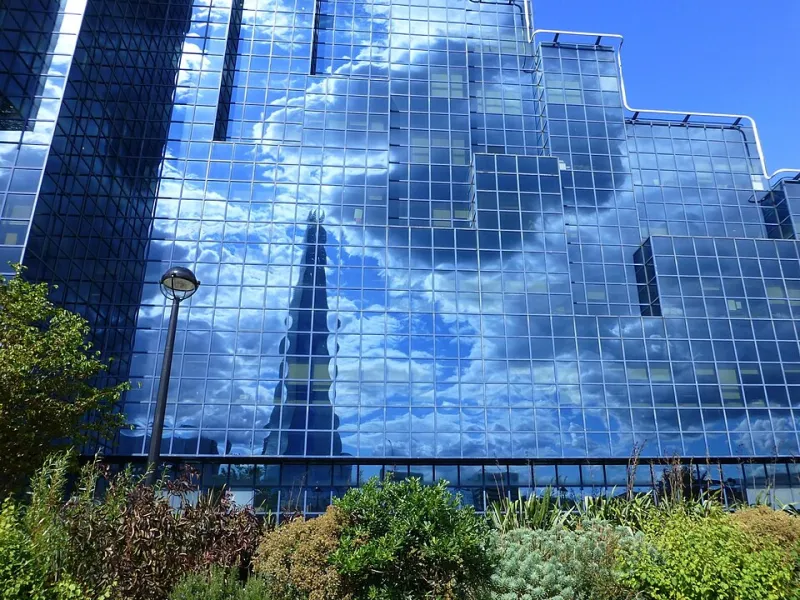
Photo: Ruth Sharville , CC BY-SA 2.0, via Wikimedia Commons
There is a quiet crisis unfolding in many of London's commercial buildings, and it is not immediately visible on any balance sheet. It manifests instead in the mid-afternoon slump that descends across open-plan floors, in the disproportionate number of respiratory complaints logged with HR departments each winter, and in the subtle but persistent difficulty that employees report when trying to concentrate in poorly ventilated meeting rooms. The culprit, in many cases, is the air itself.
London's outdoor air quality has improved markedly over recent decades, yet the capital still regularly records nitrogen dioxide and particulate matter levels that exceed World Health Organisation guidelines, particularly in inner-city areas and along major arterial routes. When that outdoor air enters a commercial building through an ageing or inadequately maintained ventilation system, it is not merely unchanged — it is often made worse. Recirculated without proper filtration, mixed with off-gassing from office furniture and equipment, and left at temperatures and humidity levels that encourage the proliferation of airborne pathogens, indoor air in many London offices is a genuine occupational health concern.
The Data Behind the Problem
The relationship between indoor air quality and cognitive performance has been the subject of substantial academic inquiry. Research published by University College London and cited in guidance from the UK Health Security Agency has consistently demonstrated that elevated concentrations of carbon dioxide — a reliable proxy for poor ventilation — are associated with measurable reductions in decision-making ability, attention, and information processing speed. In practical terms, an office with CO₂ levels above 1,000 parts per million, a threshold routinely exceeded in poorly ventilated spaces, may be operating with a workforce functioning at significantly below its potential.
The economic implications are considerable. A 2023 analysis by the Building Research Establishment estimated that poor indoor air quality costs UK businesses billions of pounds annually through increased absenteeism, reduced productivity, and higher staff turnover. For London employers, where talent acquisition and retention costs are already elevated relative to the rest of the country, these are not abstract figures.
Post-pandemic, the stakes have risen further. The COVID-19 experience fundamentally altered employee expectations around workplace safety, and ventilation moved from a background facilities concern to a front-of-mind issue for workers, trade unions, and regulators alike. The Health and Safety Executive's updated guidance on workplace ventilation, published in the wake of the pandemic, places explicit obligations on employers to ensure adequate fresh air supply — obligations that many older commercial buildings are currently struggling to meet.
London's Specific Air Quality Context
Operating a business in London carries environmental considerations that do not apply with the same force elsewhere in the United Kingdom. The Ultra Low Emission Zone, now expanded to cover most of Greater London, reflects the city's ongoing battle with traffic-related pollution. Whilst ULEZ has demonstrably reduced roadside nitrogen dioxide levels, the concentration of commercial and residential activity within the M25 means that particulate pollution remains a persistent concern, particularly for buildings situated near construction sites, logistics hubs, or high-traffic corridors.
For commercial HVAC systems, this context has a direct bearing on specification. A ventilation system drawing fresh air from a busy Central London street requires filtration capable of capturing fine particulate matter — PM2.5 and below — as well as gaseous pollutants including ozone and volatile organic compounds. Standard panel filters, which remain commonplace in many older commercial installations, are simply not adequate to this task. High-efficiency particulate air (HEPA) filtration, combined with activated carbon stages for gaseous contaminants, represents the current best practice standard for urban commercial environments.
The Business Case for Upgrading
For business owners and facilities managers, the question of HVAC investment is ultimately a financial one. The upfront cost of upgrading ventilation and cooling infrastructure is real, and in a challenging economic environment, capital expenditure decisions are subject to rigorous scrutiny. However, the return on investment case for modern climate control in commercial settings is increasingly well-evidenced.
Consider the following dimensions of value:
Productivity gains are the most significant single factor. Even modest improvements in ventilation rates and air quality have been associated with productivity uplifts of between eight and eleven per cent in controlled studies. For a London business with, say, fifty employees, the financial value of that improvement — measured against average salary costs — can recoup the cost of a full system upgrade within two to three years.
Reduced absenteeism is a closely related benefit. Poor air quality is associated with higher rates of respiratory illness, headaches, and the constellation of symptoms known as Sick Building Syndrome. Reducing the incidence of these conditions translates directly into fewer sick days and lower associated costs.
Talent attraction and retention has assumed growing importance in the post-pandemic labour market. Candidates and employees increasingly consider the physical quality of a workplace environment when making employment decisions. A demonstrably well-ventilated, thermally comfortable office is a meaningful differentiator in competitive hiring markets.
Regulatory compliance provides a further, non-negotiable dimension. Employers have a legal duty under the Workplace (Health, Safety and Welfare) Regulations 1992 to provide adequate ventilation. As enforcement activity and employee awareness both increase, the reputational and legal risks of non-compliance are growing.
What Modern Commercial HVAC Looks Like
The good news for London businesses is that the technology available to address these challenges has advanced considerably. Heat recovery ventilation systems can deliver consistently fresh, filtered air whilst recovering up to eighty per cent of the thermal energy from extracted air — dramatically reducing the energy cost of maintaining fresh air supply. Demand-controlled ventilation, which modulates air supply in real time based on CO₂ sensor readings, ensures that ventilation is always proportionate to occupancy, eliminating both under-ventilation and wasteful over-conditioning of empty spaces.
For buildings requiring cooling as well as ventilation — which, given London's increasingly warm summers, now encompasses a substantial proportion of commercial stock — modern variable refrigerant flow systems offer precise, zone-by-zone temperature control with significantly improved energy efficiency compared to legacy installations. When combined with building management system integration, these platforms provide facilities teams with granular visibility of air quality, temperature, and energy consumption across an entire premises.
A Moment for Action
The convergence of tightening regulations, heightened employee expectations, and compelling productivity data has created a genuine imperative for London businesses to reassess their approach to indoor air quality. Delaying that assessment carries costs — in lost productivity, in avoidable absenteeism, and in the growing risk of regulatory scrutiny — that are likely to exceed the cost of intervention.
At London Nitro Heating & Cooling, we provide commercial clients across the capital with comprehensive air quality assessments, system audits, and full installation and maintenance services tailored to the demands of the London business environment. Whether your premises occupy a modern glass tower in Canary Wharf or a converted warehouse in Bermondsey, we have the expertise to deliver climate control solutions that protect both your people and your bottom line.
The air in your office is not a passive backdrop to the working day. It is an active determinant of how well your people think, feel, and perform. It deserves your attention.