London Summers Have Changed. Has Your Home Kept Up?

Photo: Unknown authorUnknown author, Public domain, via Wikimedia Commons
There is a particular kind of cognitive dissonance that settles over British homeowners each July. We have spent decades gently mocking the rest of Europe for their elaborate air conditioning infrastructure, confident in the knowledge that our temperate island climate rendered such measures unnecessary. That confidence has aged poorly.
The data tells a story that is difficult to dismiss. The UK's ten hottest years on record have all occurred since 1990, with the majority concentrated in the last two decades. The summer of 2022 saw temperatures in London exceed 40°C for the first time in recorded history — a threshold that was, until recently, considered essentially impossible at this latitude. More pertinently for homeowners, these extreme peaks are increasingly accompanied by elevated humidity levels that alter the felt temperature significantly, making the heat not merely uncomfortable but, for vulnerable individuals, genuinely hazardous.
This is not a matter of isolated heatwaves that can be endured with a fan and a cold drink. It represents a structural shift in what London summers are capable of delivering — and most residential properties in the capital are wholly unprepared for it.
Why London Homes Were Never Built for This
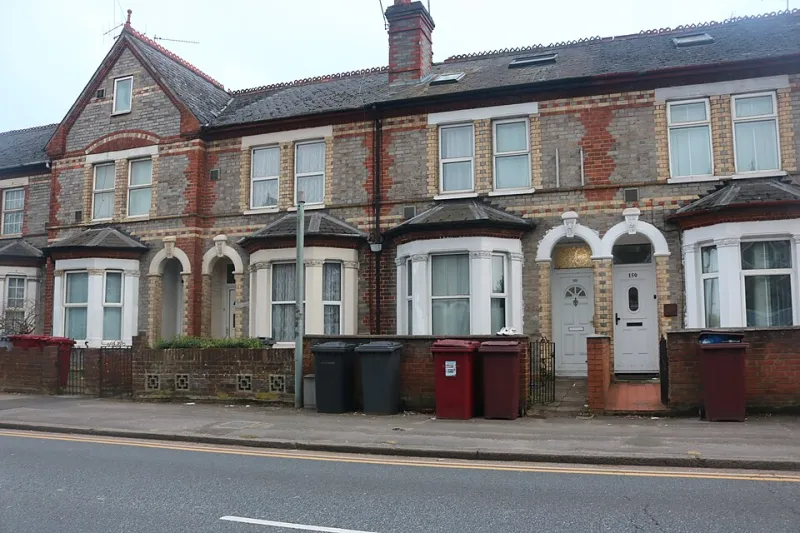
The architectural heritage of London's housing stock is, in many respects, a liability when it comes to heat management. Victorian and Edwardian terraces — which account for a substantial proportion of homes across inner London boroughs — were designed with an entirely different climate challenge in mind. Their construction priorities were damp resistance, draught exclusion, and heat retention. Thick masonry walls, sash windows designed to allow modest ventilation, and minimal roof insulation were all optimised for a world in which the primary discomfort was cold, not heat.
The irony is that many of the improvements made to these properties over the decades — double glazing, cavity wall insulation, loft insulation — have made them more thermally sealed. Excellent at retaining warmth in winter, they are equally effective at trapping heat in summer, turning south-facing rooms into something approaching a greenhouse during prolonged warm spells.
Post-war and more contemporary housing fares only marginally better. While newer builds are designed to higher energy performance standards, cooling capacity remains largely absent from residential construction specifications in the UK. The assumption, embedded in decades of building regulation and architectural practice, has been that London simply does not get hot enough to warrant it. That assumption is now overdue for revision.
The Humidity Factor
Temperature alone does not fully capture the discomfort of recent London summers. Humidity has emerged as an equally significant variable — and one that is less widely discussed. Unlike the dry heat associated with Mediterranean or continental climates, London's summer heat increasingly arrives with moisture. This has a direct physiological effect: the body's ability to cool itself through perspiration is diminished when the surrounding air is already saturated, making high-humidity conditions feel markedly more oppressive than the thermometer reading alone would suggest.
This matters for home cooling decisions because not all cooling solutions address humidity equally. A portable fan, for instance, does nothing to reduce the moisture content of indoor air — it merely moves warm, humid air around. Even some entry-level air conditioning units prioritise temperature reduction without adequately managing humidity, leaving occupants cool but clammy. Properly specified residential air conditioning systems include dehumidification as a core function, not an optional extra.
Recognising When Your Current Approach Is No Longer Adequate
Many London homeowners still rely on a combination of portable fans, open windows, and temporary measures to manage summer heat. For a significant portion of the year, this remains workable. The problem arises during sustained warm periods — typically those lasting more than three or four consecutive days — when the thermal mass of the building itself becomes saturated with heat, and overnight temperatures fail to drop sufficiently to allow passive cooling to reset.
If you are finding that bedrooms remain uncomfortably warm well after midnight during summer, that sleep quality deteriorates noticeably from late June onwards, or that certain rooms in the house become effectively unusable during afternoon hours, these are not merely inconveniences to be endured. They are indicators that your home's passive cooling capacity has been exceeded, and that active climate control solutions merit serious consideration.
Similarly, if you or members of your household fall into groups for whom heat exposure carries elevated health risk — the elderly, young children, those with cardiovascular or respiratory conditions — the threshold for intervention should be lower still. The public health dimensions of residential heat exposure are increasingly recognised by health authorities, and the NHS has issued progressively more emphatic guidance on the risks of prolonged indoor heat during summer months.
What Modern Residential Cooling Actually Looks Like
The image many people carry of home air conditioning — noisy, intrusive window units or the industrial-looking systems associated with commercial premises — bears little resemblance to what contemporary residential solutions offer. The technology has advanced considerably, and the options available to London homeowners today are both more effective and more aesthetically considered than their predecessors.
Split-system air conditioning, in which a compact indoor unit connects via refrigerant pipework to a discreet external condenser, is now the standard residential installation approach. Modern units operate with remarkably low noise levels — many produce less ambient sound than a typical refrigerator — and are available in designs that integrate naturally into contemporary interiors. Crucially, they are reversible: the same system that cools in summer provides efficient heating in winter, functioning as a heat pump that can significantly reduce reliance on gas central heating during shoulder seasons.
For properties where a single unit is insufficient — larger homes, properties with complex layouts, or those where different occupants have different temperature preferences — multi-split configurations allow several indoor units to be served by a single external condenser, providing zoned climate control across multiple rooms.
Energy efficiency has also improved dramatically. Current-generation inverter-driven systems adjust their output continuously to match demand rather than cycling on and off at full power, resulting in substantially lower running costs than older fixed-speed designs. Many units now carry A+++ energy ratings and can be managed remotely via smartphone, allowing homeowners to pre-cool rooms before arriving home or adjust settings while away.
Thinking Ahead
The summers of the past decade have demonstrated, with increasing clarity, that the climate assumptions underlying London's residential housing stock are no longer reliable. The question facing homeowners is not whether conditions will continue to challenge passive cooling strategies — the meteorological evidence suggests they will — but how prepared they wish to be when the next prolonged heatwave arrives.
Investing in a properly specified residential cooling system is, at its core, an investment in liveability. It is also, given the dual-function capability of modern heat pump technology, an investment that pays dividends throughout the year. At London Nitro Heating & Cooling, our residential assessments are designed to match the right solution to each property's specific characteristics — because in a city as architecturally varied as London, there is no single answer. There is only the right one for your home.