Nobody's Boiler: How Split Ownership Leaves London's Smallest Climate Systems to Rot
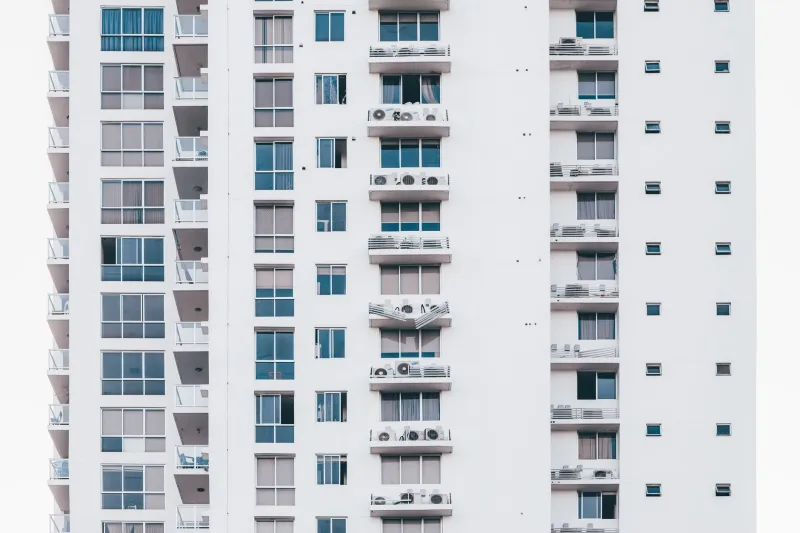
Walk through almost any modern London apartment block and you will find them: a compact combi boiler behind a balcony louvre, a slim air handling unit wedged above kitchen cupboards, a heat recovery ventilator humming quietly in a hallway cupboard. These are the workhorses of flat living — and, across the capital, they are quietly falling apart.
The reason is rarely technical. It is administrative. In leasehold buildings, no single party clearly owns the duty of care for these small systems, and so the duty belongs to no one.
The Accountability Gap
In a freehold house, responsibility is unambiguous. The homeowner books the annual service, pays for the repair, and reaps the benefit. In a block of fifty flats, the picture fractures immediately.
The freeholder or management company typically maintains the structure, communal systems, and anything serving multiple dwellings. But a boiler hanging on a private balcony serves one flat — so is it the leaseholder's problem? The leaseholder, meanwhile, may believe the unit is a communal asset because it sits on common fabric. The managing agent points to the lease; the lease points ambiguously back. Meanwhile, the unit ages.
Kitchen and bathroom ventilation units fare even worse. They are small, inexpensive, and invisible — nobody calls an engineer for a £300 extractor unit until it has already failed, and by then the ducting behind it may be clogged with years of grease and lint.
What Neglect Actually Costs
The consequences compound slowly, which is precisely why they go unnoticed.
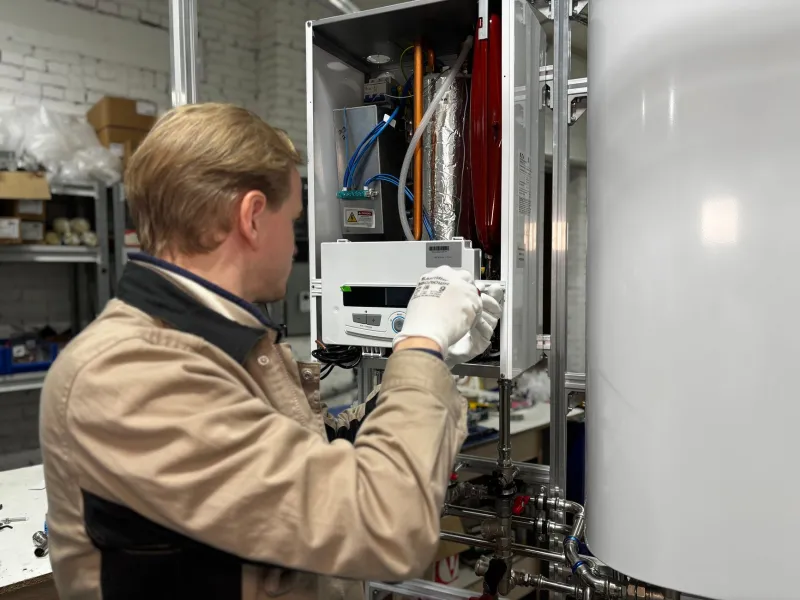
A boiler that misses successive services loses efficiency year on year. For a flat dweller on a metered tariff, that can translate into tens of pounds a month during winter — money that a £90 service would have preserved. More seriously, neglected gas appliances carry safety implications that no lease clause can mitigate.
Blocked kitchen ventilation is less dramatic but equally corrosive. Condensation settles on window frames and wall corners. Mould follows. In sealed, well-insulated modern flats, a failed air handling unit can push humidity and CO2 levels to uncomfortable — and unhealthy — heights within days.
There is also a cumulative cost to the building itself. A leaking balcony boiler drips onto the structure below. A failed kitchen extract pushes grease into ductwork that was never designed to be cleaned from the outside. Small failures, ignored, become communal liabilities.
Why Small Systems Get Overlooked
Part of the problem is perception. Large plant — rooftop chillers, communal boilers, basement plant rooms — appears on maintenance schedules and in sinking fund budgets precisely because it is visible and expensive. Small, distributed systems lack a champion. No one walks the balconies with a clipboard.
The repair economics work against them, too. An engineer call-out carries a fixed cost whether the job takes twenty minutes or two hours. For a single small unit, that call-out can feel disproportionate, so the decision is deferred. And deferral, in facility management, is simply decay with better paperwork.
What Residents Can Do
The remedy begins with the lease. Residents' associations and leaseholders should read the maintenance obligations carefully and, where ambiguity exists, raise it formally with the managing agent. Many leases do assign responsibility for units serving a single dwelling to the leaseholder — clarity alone eliminates half the problem.
From there, coordination is the key. Individual flat owners arranging separate, ad-hoc services is inefficient and inconsistent. A residents' association that negotiates a block service visit — one engineer, one day, twenty balconies — secures better rates, consistent standards, and a shared record of the building's condition.
Where the freeholder retains responsibility, residents are entitled to ask for evidence: when was the last service of the ventilation systems, and where is the record? Under the landlord's repairing obligations, 'it must be somewhere' is not an answer.
A Modest Proposal for Better Buildings
London's housing stock is densifying faster than its maintenance culture is maturing. The towers and mansion blocks of the next decade will depend on hundreds of thousands of small, distributed climate systems — and the buildings that thrive will be those where accountability is written down, budgets are ring-fenced, and somebody, somewhere, keeps a clipboard.
Sweat the small stuff. In a leasehold city, the smallest machines are often the ones closest to home.