Before the First Frost: The Case for a Late-Summer Boiler Health Check
Every year it follows the same pattern. The first properly chilly evening arrives in late September or early October, thermostats across the capital flick from off to on, and within days our phone lines at London Nitro Heating & Cooling fill with the same story: the boiler that worked perfectly in April now refuses to start, rattles ominously, or simply hums without ever firing.
It is a phenomenon familiar to every heating engineer in the country — the September rush. And it is almost entirely avoidable.
What a Summer of Idleness Actually Does
A boiler is rather like a car left on a driveway for months. Systems that sit dormant from May to September are prone to a handful of predictable problems:
- Seized pumps and valves. Moving parts that rest in one position for months can stick when finally called upon. The diverter valve, which routes hot water between taps and radiators, is a frequent offender.
- Settled sludge. Magnetite debris in the system has all summer to settle into low points, constricting flow and placing strain on the pump the moment it restarts.
- Slow, silent leaks. A pressure gauge that read 1.5 bar in spring may sit well below 1.0 bar by autumn, a sign of a weeping joint or expansion vessel fault that went unnoticed because nobody was looking.
- Deteriorated seals and gaskets. Rubber components dry and harden over time, particularly in hot airing cupboards and loft spaces.
None of these faults announce themselves in July, because nothing is asking the boiler to work. They surface precisely when demand returns — and when every engineer in London is already booked solid.
The Five-Point Check Every Homeowner Can Do
Before the first cold snap, we recommend a simple five-minute audit:
- Check the pressure gauge. With the system cold, the needle should sit between 1.0 and 1.5 bar. If it has drifted low, note it — repeated pressure loss is a fault, not a chore.
- Run the heating briefly. Even in August, fire the heating for ten minutes. Listen for knocking, gurgling or grinding, and feel whether radiators heat evenly, particularly upstairs.
- Test the flue terminal outside for obstructions — bird nests, ivy and debris are common summer squatters.
- Bleed a radiator. Cold patches at the top indicate trapped air, a straightforward fix that improves efficiency immediately.
- Locate your service history. If the last annual service was more than twelve months ago, it is overdue — and many manufacturer warranties are void without one.
Why Late Summer Is the Smart Season
There is a practical economics to timing. During the September rush, emergency call-outs command premium rates, and waiting times can stretch to a week or more — a long time for a family shivering in an Ealing semi or a top-floor flat in Croydon. Booking a routine service in August or early September means:
- Flexible appointment times rather than emergency slots
- Standard rates instead of out-of-season premiums
- Any necessary repairs completed before you genuinely need the heating
- Compliance documentation kept current for warranty and, for landlords, legal purposes
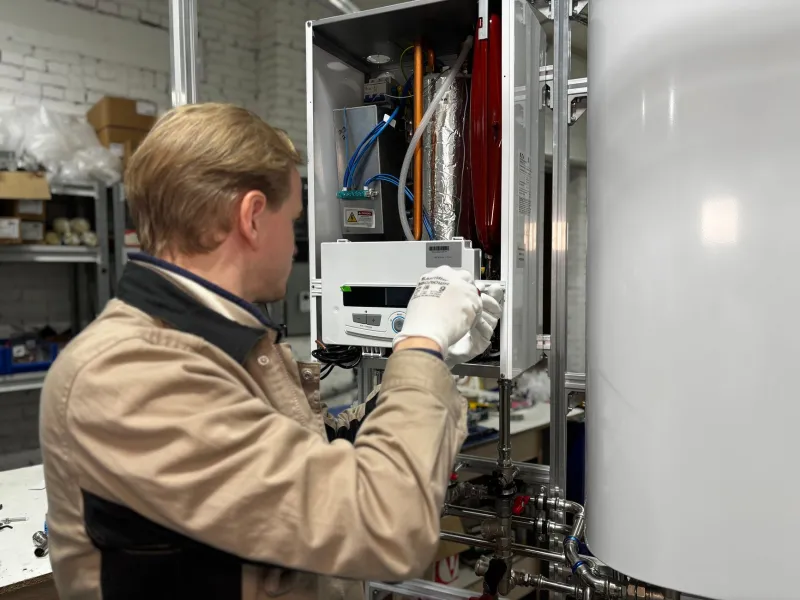
An annual service typically takes under an hour. A qualified engineer will test the flue gas readings, clean the burner and heat exchanger, check the expansion vessel pressure, verify safety devices, and identify worn components before they fail midwinter.
A Word on Landlord Obligations
For London's considerable buy-to-let sector, the timing carries legal weight. Landlords must obtain a Landlord Gas Safety Record every twelve months, and scheduling alongside a pre-winter service in late summer keeps both obligations aligned — and avoids the January scramble when tenants are chasing certificates.
Plan Now, Rest Later
The most reliable boiler is one that has been inspected, cleaned and signed off before the season it is needed most. At London Nitro Heating & Cooling, our engineers service all major domestic boiler makes across Greater London, and our late-summer diary is deliberately kept open for exactly this purpose.
Book early, and when the first frost arrives, your boiler will greet it like a well-rested professional — ready to work, and far less likely to let you down.