Forty-Five Degrees and Rising: The Unseen Climate Emergency Inside London's Restaurant Kitchens
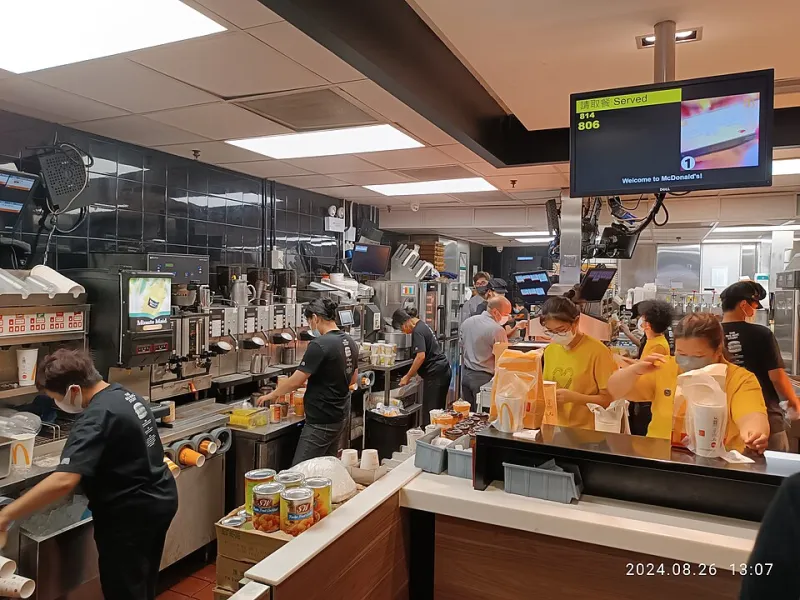
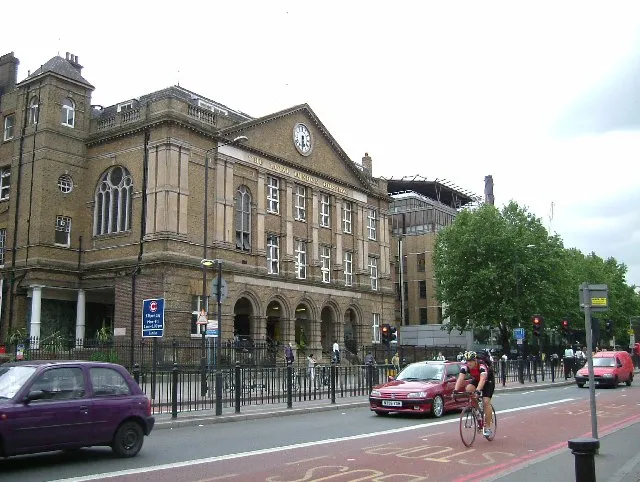
Photo: Shammi 826, CC0, via Wikimedia Commons
Walk past almost any restaurant in Soho, Shoreditch or Borough Market on a Friday evening and you will smell the ambition of London's hospitality boom. What you will not see is the climate those kitchens are operating in — and increasingly, it is an environment that would fail a workplace assessment on the spot.
Kitchens designed to reach 45°C and beyond during a full service are no longer an anomaly. They are becoming the norm across the capital, and the ventilation and cooling infrastructure supporting them has not kept pace.
A Boom Built on Heat
London's restaurant sector has expanded relentlessly over the past decade. Compact dining rooms, basement kitchens in converted Georgian terraces, and delivery-first operations squeezed into former retail units all share one common trait: high heat output in restricted space.
A single commercial range can emit several kilowatts of heat continuously. Add combi ovens, fryers, grills, dishwashing equipment and a dozen bodies in close quarters, and the thermal load of a modest kitchen can rival that of a small server room. Yet while data centres receive meticulous climate engineering, kitchens are frequently left with whatever extraction canopy happened to be installed when the fit-out was rushed through.
When Extraction Falls Short
The consequences of undersized or poorly maintained ventilation are cumulative rather than immediate. Grease-laden air that is not effectively captured settles on surfaces, inside ductwork and on extraction components, progressively choking airflow. A canopy that performed adequately on day one may be moving a fraction of its design volume within two years if interim deep cleaning has been neglected.
The symptoms are familiar to anyone who works in the sector: condensation streaming down tiled walls, doors propped open in January to displace heat, chefs rotating off the pass more frequently, and refrigeration units working overtime in ambient temperatures they were never rated for.
That last point deserves emphasis. When kitchen ambient temperatures climb, walk-in chillers and upright fridges struggle to hold safe holding temperatures. Food safety compliance — the foundation of any Food Standards Agency inspection — becomes harder to demonstrate precisely because the climate around the equipment has failed.
The Human Cost
Heat stress is not a trivial matter. The Health and Safety Executive expects employers to manage thermal comfort sensibly, and in a kitchen regularly exceeding 40°C, that expectation becomes difficult to meet without engineered intervention. Dehydration, fatigue and reduced concentration are precursors to burns, cuts and slips — the most common kitchen injuries.
There is a commercial dimension too. Staff retention in London hospitality is notoriously fragile, and a kitchen that is visibly punishing to work in is a quiet but persistent driver of turnover. Replacing an experienced chef de partie costs far more than the ventilation upgrade that might have kept them.
What Proper Kitchen Climate Engineering Looks Like
A correctly specified kitchen climate strategy is not simply a bigger fan. It begins with a heat load calculation that accounts for every piece of cooking equipment, its duty cycle and its position, alongside the make-up air requirement — the fresh air that must be supplied to replace what is extracted, or the extraction simply will not function.
Beyond the canopy, a well-engineered kitchen typically incorporates:
- Demand-controlled extraction, modulating fan speed with cooking activity rather than running flat out all day
- Dedicated make-up air systems, ideally tempered, so the kitchen is not drawing hot air from the dining room or the street
- Targeted cooling for critical zones, such as the pass and plating area, where staff concentration matters most
- Refrigeration siting and ventilation, keeping condensers away from heat sources and ensuring adequate airflow
- A structured cleaning and maintenance regime for ductwork, filters and fans, with TR19-grade standards as the benchmark for grease management
The Regulatory Direction of Travel
The regulatory environment is tightening. Insurance insurers increasingly scrutinise ductwork cleaning records after kitchen fires, and environmental health officers are more alert than ever to the interplay between kitchen temperature and food safety. For operators planning new sites or refits, building compliance around climate engineering from the outset is markedly cheaper than retrofitting after an incident or an improvement notice.
An Investment, Not an Overhead
There is a temptation, particularly among independent operators watching every penny, to treat ventilation and cooling as a line item to be trimmed. The evidence points the other way. Efficient, well-maintained extraction reduces energy waste, extends equipment life, protects compliance and — most importantly — keeps the people who make the business viable safe and productive.
London's restaurant boom shows no sign of slowing. The question for operators is not whether their kitchens will run hot, but whether the climate around them will be managed with the same seriousness as the menu. At London Nitro Heating & Cooling, we believe it should be — and we work with hospitality businesses across the capital to make it so.