Failure Season: The Hidden Cost of HVAC Breakdowns for London's Commercial Operators

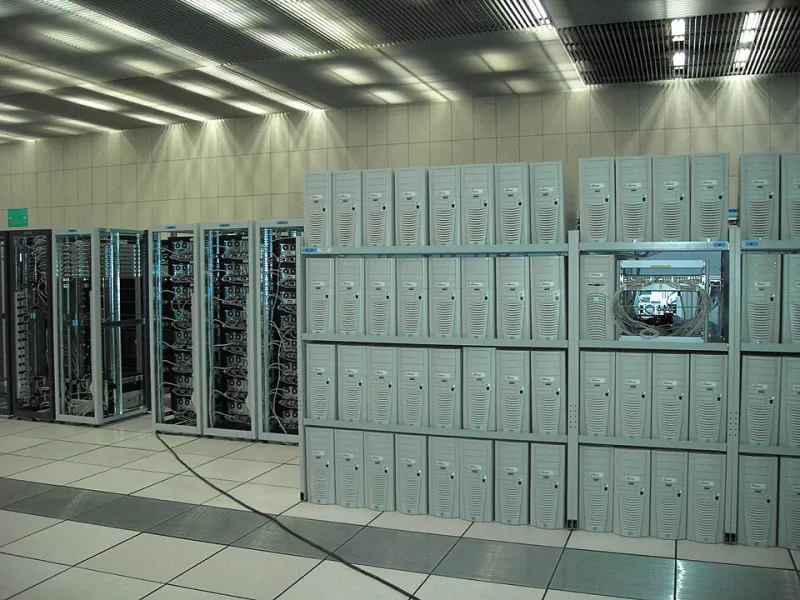
Photo: Yuhuan hengli, CC0, via Wikimedia Commons
When the Temperature Turns Against You
In the third week of last January, a temperature inversion settled over London and held for eleven days. For most residents, it was an inconvenience — commutes complicated by ice, heating bills spiking, the general misery of a British winter asserting itself. For a number of London's commercial operators, however, that cold snap marked the beginning of something considerably more damaging.
A wholesale food distributor in Park Royal lost an estimated £180,000 in perishable stock when a refrigeration and heating failure in their primary warehouse allowed ambient temperatures to fluctuate beyond safe storage thresholds for over 36 hours. A restaurant group operating four sites across Central London was forced to close two venues entirely for five days after boiler failures left both premises without heat or hot water — a closure that coincided with a pre-booked corporate event season. A fashion retailer in the West End watched its flagship store empty within hours of its HVAC system failing during the final weekend of the January sales, as internal temperatures dropped to levels that made extended browsing untenable.
These are not anomalies. They are representative of a pattern that repeats itself across London's commercial sector every winter and, increasingly, every summer. The common thread in almost every case is not catastrophic or unforeseeable mechanical failure — it is the absence of structured, pre-emptive maintenance.
The 72-Hour Window: Why It Matters
Facility managers who have studied HVAC failure patterns in commercial settings consistently identify a critical observation: in the majority of unplanned breakdowns, detectable warning signs were present at least 72 hours before the system ceased to function. Abnormal noise patterns, incremental pressure variances, irregular cycling behaviour, unusual energy consumption readings — these signals are almost always there. They are simply not being acted upon.
The concept of the 72-hour rule, as it has come to be understood in professional facilities management circles, is not a single procedure but a philosophy of operational readiness. It holds that any commercial HVAC system operating in a high-dependency environment should be subject to monitoring protocols sensitive enough to detect emerging faults with sufficient lead time for intervention before failure occurs. Seventy-two hours is generally considered the minimum window required to source parts, schedule qualified engineers, and carry out remedial work without business disruption.
For that window to be available, the monitoring infrastructure must already be in place.
What Facility Managers Are Saying
In conversations with facility managers across London's retail, hospitality, and logistics sectors, a consistent picture emerges: preventative maintenance budgets are frequently the first line item to be reduced during cost-cutting exercises, and the consequences tend to surface at the worst possible moment.
One facilities director overseeing a portfolio of restaurant properties in East London described the dynamic with some candour. His group had historically operated on a reactive maintenance model — calling engineers when problems arose rather than scheduling inspections in advance. After experiencing two consecutive winter closures at separate sites, the business conducted a retrospective analysis and found that in both cases, service records showed the affected units had not received a full inspection in over fourteen months. The combined cost of the two closures — lost revenue, emergency call-out fees, accelerated equipment replacement, and a measurable dip in online review scores — substantially exceeded what a comprehensive annual maintenance programme across the entire portfolio would have cost.
A logistics operator in Wembley took a different approach following a cooling failure that compromised a pharmaceutical storage contract. They implemented continuous remote monitoring across all refrigeration and climate control units, with automated alerts triggered by any deviation beyond pre-set operational parameters. In the eighteen months since implementation, the system has flagged four developing faults — all of which were resolved within the 72-hour window, without a single instance of stock loss or operational disruption.
The Anatomy of a Commercial HVAC Failure
Understanding how commercial heating and cooling systems typically fail is essential to appreciating why structured prevention is so effective.
The majority of unplanned breakdowns in commercial HVAC systems fall into three broad categories. The first is component fatigue — the gradual degradation of parts such as compressors, heat exchangers, fan motors, and electrical controls that operate continuously under load. These components do not fail instantaneously; they deteriorate progressively, and that deterioration is measurable.
The second category is maintenance neglect — the accumulation of avoidable problems such as blocked filters, contaminated refrigerant circuits, corroded electrical connections, and untreated limescale or sludge buildup that, left unaddressed, accelerate component wear and eventually trigger failure.
The third is external stress events — sudden cold snaps, heatwaves, or periods of sustained peak demand that push systems operating at the margins of their capacity beyond their tolerance. A system in good condition handles these events without incident. A system already compromised by fatigue or neglect does not.
The 72-hour rule addresses all three categories by creating a structured schedule of inspection that identifies fatigue indicators, clears maintenance-related problems before they compound, and ensures systems are in optimum condition ahead of high-demand periods.
Building a Prevention Framework for Commercial Operators
For London businesses operating in temperature-sensitive environments, the following framework represents a practical starting point.
Pre-season commissioning inspections. Before the onset of winter heating demand and summer cooling demand, every primary HVAC unit should receive a full inspection by a qualified engineer. This should include refrigerant pressure checks, heat exchanger cleaning, electrical connection testing, filter replacement, lubrication of moving parts, and a review of control system calibration.
Continuous performance monitoring. Whether through a building management system (BMS) or a standalone monitoring solution, real-time data on system performance — including temperature differentials, energy consumption, and cycling frequency — provides the earliest possible warning of developing problems.
Documented service history. A surprising number of commercial operators cannot readily produce a complete service history for their HVAC equipment. Without this documentation, it is impossible to identify deteriorating trends or to demonstrate compliance with relevant health and safety obligations.
Emergency response planning. Every business operating a temperature-sensitive environment should have a documented emergency protocol that identifies backup options, key contacts, and escalation procedures in the event of a system failure. The time to establish these arrangements is not during an active breakdown.
Contractual maintenance agreements. For businesses where HVAC failure carries significant financial or regulatory consequence, a contracted maintenance agreement with a specialist provider offers both scheduled preventative care and priority response guarantees. The commercial terms of such agreements are almost invariably more favourable than the cost of emergency call-out rates during peak demand periods.
The Regulatory Dimension
Beyond the immediate financial impact, commercial HVAC failures carry regulatory implications that are frequently underestimated. Businesses handling food, pharmaceuticals, or other regulated goods are subject to strict temperature control requirements under both UK food safety legislation and sector-specific standards. A documented failure to maintain appropriate storage conditions can result in regulatory investigation, enforcement action, and in serious cases, reputational consequences that outlast the immediate incident.
For businesses operating in the hospitality sector, the Workplace (Health, Safety and Welfare) Regulations 1992 impose a duty to maintain reasonable temperatures in working environments. A prolonged heating failure is not merely a customer experience problem — it is a potential compliance issue.
The Preventable Majority
The losses sustained by London businesses during last winter's HVAC failures were not inevitable. The equipment did not fail without warning. The warning signs were present; the systems to detect and act on them were not.
Investing in structured maintenance and monitoring infrastructure is not a discretionary expenditure for businesses operating in temperature-dependent environments — it is a fundamental component of operational risk management. The 72-hour rule is not a guarantee against all equipment failure. It is, however, a framework that transforms the majority of potential catastrophic breakdowns into manageable, planned maintenance events.
For London's commercial operators, that distinction is the difference between a controlled intervention and a crisis.
London Nitro Heating & Cooling offers tailored commercial maintenance programmes and HVAC health assessments for businesses across the capital. Contact our commercial team to discuss a service framework appropriate to your operations.