Lessons from the Deep: What London's Tunnel Cooling Systems Can Teach Your Home or Business
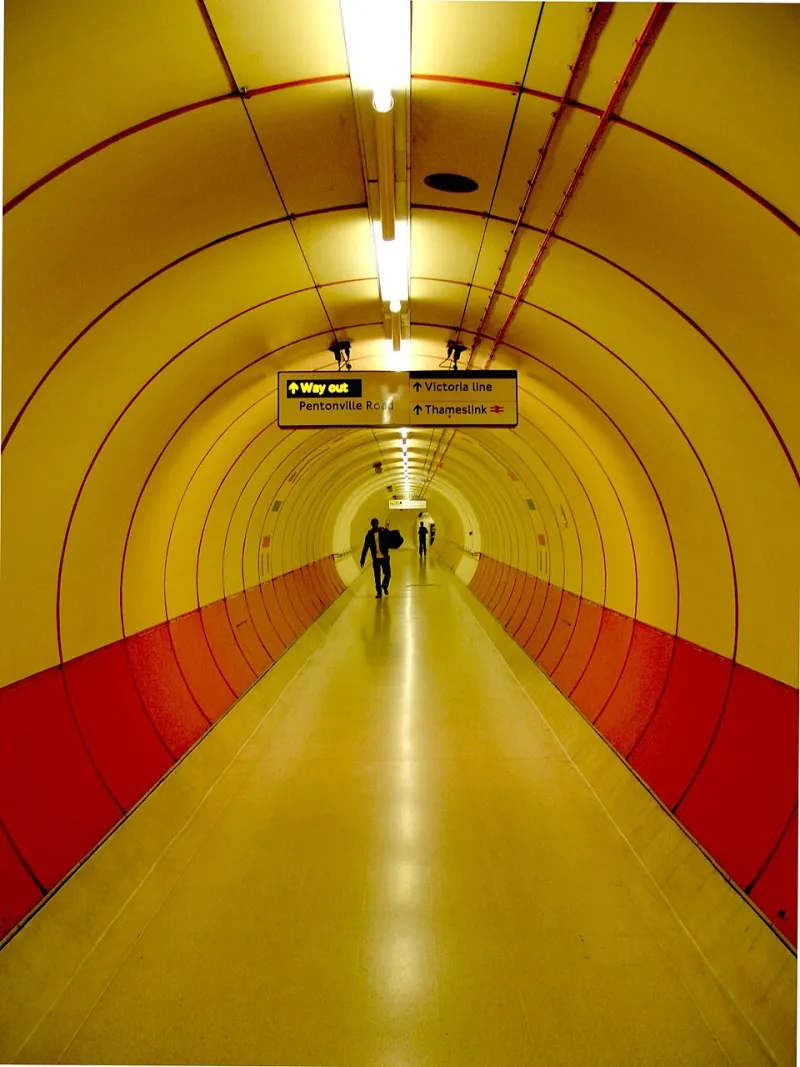
Photo: Photo by User:Salimfadhley, CC BY-SA 3.0, via Wikimedia Commons
Some fifty metres beneath Baker Street, the air can exceed thirty degrees Celsius on a summer afternoon. The trains generate heat through braking and friction, the passengers add body warmth, and the surrounding London Clay — an exceptionally effective insulator — traps every degree like a sealed oven. Yet millions of commuters pass through the network each day in relative comfort, thanks to one of the most ambitious climate engineering programmes in Europe.
At London Nitro Heating & Cooling, we spend our working lives designing, installing and maintaining climate systems across the capital. We are firm believers that some of the best lessons in heating and ventilation are hiding in plain sight — or, in this case, in plain tunnel.
The Problem That Grew Over a Century
When the first deep-level Tube lines opened in the late nineteenth century, engineers assumed the ground itself would keep things cool. For a while, it did. The clay absorbed heat from the trains year after year, and by the 1990s it had effectively saturated. There was nowhere left for the warmth to go.
This is a phenomenon we see in miniature in London buildings all the time. A poorly ventilated loft conversion, a plant room starved of airflow, a server cupboard with a domestic extractor fan — all of them work fine at first, then quietly fail as heat accumulates in the fabric of the building. The lesson from the Underground is blunt: cooling capacity is not a fixed feature. It must be designed against a realistic heat load, and that load grows.
Cooling Without Opening a Window
One of the most striking aspects of the Tube's modern cooling programme is how little of it relies on conventional air conditioning. Deep stations are often too confined and too fire-sensitive for large refrigerant-based systems, so engineers have turned to alternatives.
Chilled water systems now run beneath platforms at stations such as Green Park and Oxford Circus, absorbing heat before it reaches passenger areas. On the network's newer lines, platform screen doors and purpose-built tunnel cooling shafts reduce the amount of warm air pushed onto platforms in the first place. And at stations including St Pancras and Moorgate, large fan shafts push ambient air through the tunnels — passive ventilation doing the heavy lifting wherever engineering allows.
For commercial clients, the parallel is direct. Before specifying a cooling system, we always ask what can be done passively. Correctly sized ventilation, shading, insulation and airflow pathways frequently reduce the required mechanical capacity — and with it, running costs and carbon output. A system designed around a reduced load is cheaper to run for its entire life.
The Heat Doesn't Disappear — It Goes Somewhere
Perhaps the most compelling chapter in the story is the Bunhill Heat and Power network in Islington. There, waste heat captured from the Northern line's ventilation shafts is recovered and fed into a district heating scheme serving more than a thousand local homes, with warm water supplied to residents at a fraction of conventional cost.
The principle — heat recovery — is not reserved for megaprojects. Modern mechanical ventilation with heat recovery (MVHR) units in homes and commercial premises recover a substantial proportion of the warmth from outgoing stale air and transfer it to incoming fresh air. In a city where heating costs remain a persistent anxiety for households and small businesses alike, recovering heat you have already paid for is simply sensible.
Design for the Worst Day, Not the Average One
Transport for London's engineers size their systems against peak summer conditions, crowding levels and worst-case failure scenarios. It is a discipline we advocate for every client, domestic or commercial. A boiler specified for a mild winter, or an air conditioning unit sized for an average July, will let you down precisely when it matters most.
Our approach at London Nitro Heating & Cooling follows the same logic the Underground engineers apply: calculate the genuine load, build in headroom, and maintain the system on a schedule rather than a hope. The Underground's cooling infrastructure is monitored continuously, because a failure discovered at two in the afternoon in August is far costlier than one caught in a routine inspection.
Bringing It Back to Street Level
Few of our clients need to cool a Victorian tunnel through London Clay. But nearly all of them face versions of the same challenge: rising temperatures, rising energy costs, and buildings that were never designed with modern climate realities in mind.
The Underground's example offers three transferable principles. First, understand where your heat is coming from and where it can go. Second, exhaust passive and recovery options before defaulting to energy-hungry mechanical cooling. Third, treat maintenance as infrastructure, not as a reaction to breakdown.
The capital's transport engineers have spent decades learning these lessons the expensive way. The rest of us can simply borrow them — whether we are responsible for a family home in Walthamstow or a shop floor in Soho. If you would like to discuss how these principles might apply to your property, our engineers are always available for a considered, no-pressure assessment.