Under the Counter, Over the Limit: The Improvised Cooling Setups Putting London's Micro-Businesses at Risk
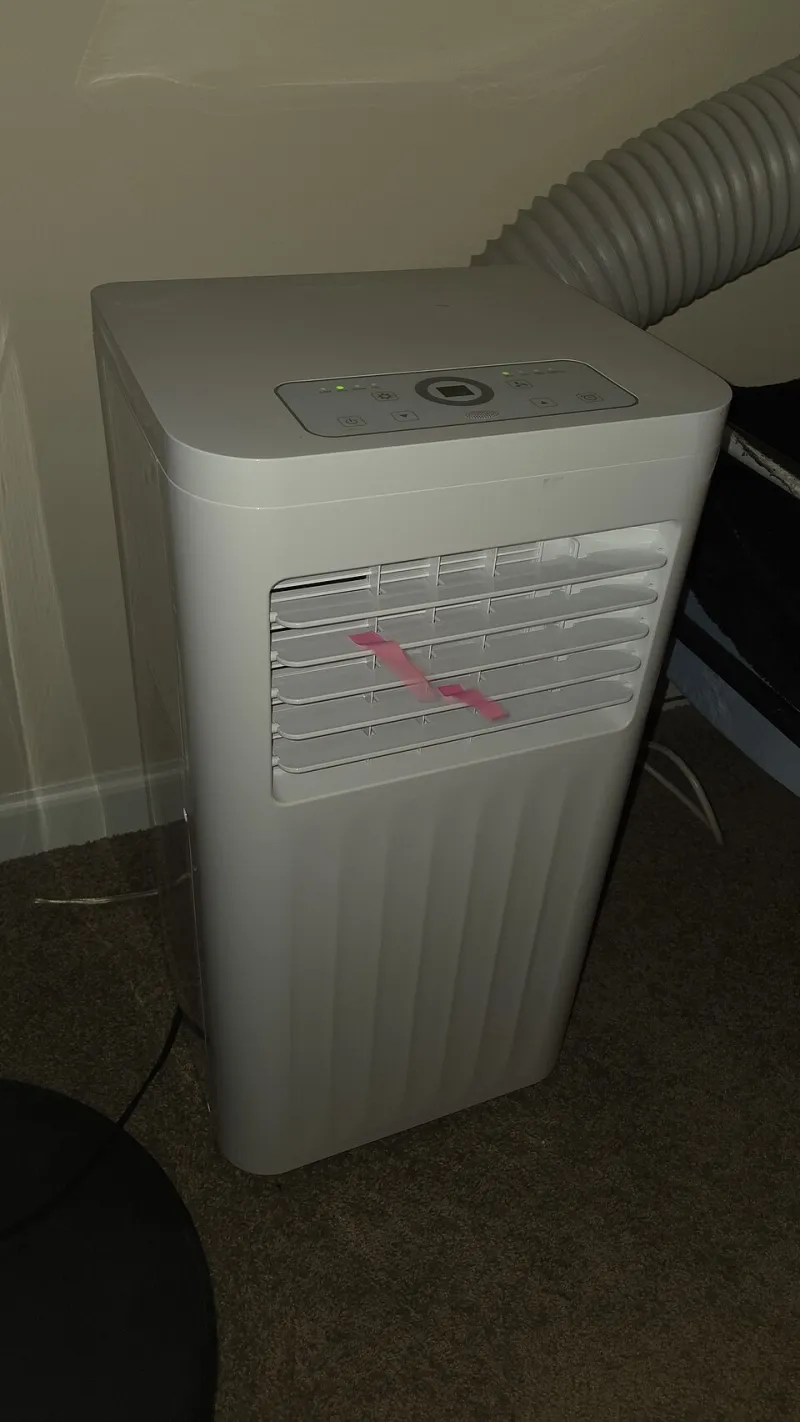
Photo: ChrisRebb, CC0, via Wikimedia Commons
Walk down almost any high street in Peckham, Ealing or Holloway and you will pass dozens of businesses running technology they never planned for. A convenience store with a till system, CCTV recorder and broadband router crammed into a cupboard that also holds the mop. A hair salon with a portable air conditioning unit wedged permanently in the back door, its exhaust hose taped to a vent that was never designed for it. A café whose 'office' is a laptop and a hard drive sitting on a shelf above the dishwasher.
None of these businesses would describe themselves as having a server room. Yet functionally, that is exactly what they have created — and almost none of them have given any thought to how those spaces are cooled, ventilated or maintained.
The Cupboard Nobody Owns
In larger organisations, climate control for IT equipment falls to a facilities team. In a ten-person business — or a two-person business — it falls to whoever notices the room feels warm. The result is a patchwork of half-measures: a domestic fan pointed at a router, a portable air conditioner bought in a panic during a heatwave, or simply a door propped open with a fire extinguisher in the hope that a draught will do the job.
The problem is that modern equipment does not forgive improvisation. Networked storage drives, point-of-sale terminals and CCTV recorders generate continuous heat, and they fail noticeably earlier when ambient temperatures climb above the mid-twenties. A stock cupboard in a London shop — small, unventilated, often sited above or beside other heat-producing equipment — can easily exceed 35°C on a summer afternoon. At those temperatures, hardware lifespan shortens dramatically, and data loss becomes a genuine commercial risk rather than an abstract one.
The Costs That Don't Appear on an Invoice
The dangers of improvised cooling rarely announce themselves as a single dramatic failure. They accumulate quietly.
Electrical strain. Portable air conditioners are frequently plugged into circuits already carrying fridges, kettles and lighting. In older shop units, wiring may not have been assessed in decades. Overloaded circuits and daisy-chained extension leads are among the most common causes of electrical fires in small commercial premises.
Condensation and drainage. A portable unit venting through a window in July will produce litres of condensate a day. Where that water goes — a bucket, a drip onto stockroom carpet, a slow leak behind a display chiller — is often nobody's responsibility until the damage is done.
Voided warranties. Manufacturers of both IT equipment and cooling hardware specify operating conditions. A server that fails at 40°C in an unventilated cupboard, or a portable unit that has never been serviced, may not be covered. Small businesses frequently discover this only when they make a claim.
Energy waste. An unsized, unmaintained portable unit working against a permanently open door can consume more electricity than a properly specified split system, while delivering worse results.
What Sensible Cooling Looks Like for a Micro-Business
The reassuring news is that professional climate control is no longer the preserve of office blocks and chain retailers. A wall-mounted split system serving a stock room or equipment cupboard is a modest investment, particularly when weighed against the cost of replacing a failed till system, recovering lost CCTV footage or settling an insurance dispute after an electrical fire.
A properly designed solution for a small commercial space typically involves:
- A correctly sized unit matched to the actual heat load of the room, including equipment, not just floor area
- Fixed drainage and condensate management rather than buckets and guesswork
- A dedicated electrical supply where required, installed and certified by a qualified engineer
- An annual service to keep efficiency high and warranties intact
For businesses running genuinely heat-sensitive kit, even a small ventilated enclosure with controlled airflow can transform reliability.
A Checklist for the Warning Signs
Any small business owner can carry out this five-minute audit today:
- Touch test. Place a hand on the equipment cupboard door. If it is noticeably warm to the touch, the space is running hot.
- Listen. Fans whirring at high speed constantly, or equipment that feels hot rather than warm, indicate inadequate airflow.
- Smell. A faint plastic or hot-dust odour near equipment or sockets is never normal.
- Look at the sockets. Discoloured plates, warm plugs or melting-smelling extension leads demand immediate attention.
- Check the portable unit. If it has no service history, an uncleaned filter and a hose gaffer-taped to a window, it is a liability, not a solution.
- Ask when the electrics were last inspected. Commercial premises should hold a current Electrical Installation Condition Report.
If more than two of these raise a concern, the cooling arrangement is not a stopgap that is working — it is a problem that has not yet presented its invoice.
Plan Rather Than Improvise
London's small businesses are remarkably resourceful, and that resourcefulness is often what keeps them afloat. But climate control is one area where improvisation carries a compounding cost: in hardware, in energy, in insurance and occasionally in safety.
At London Nitro Heating & Cooling, we work with micro-businesses across the capital to design cooling and ventilation solutions that fit compact premises and modest budgets — from single split systems for equipment rooms through to scheduled maintenance that keeps everything compliant and efficient. A short site visit costs far less than the failure it prevents.