Bells, Timers and Frozen Fingers: Rethinking How London's Schools Are Heated
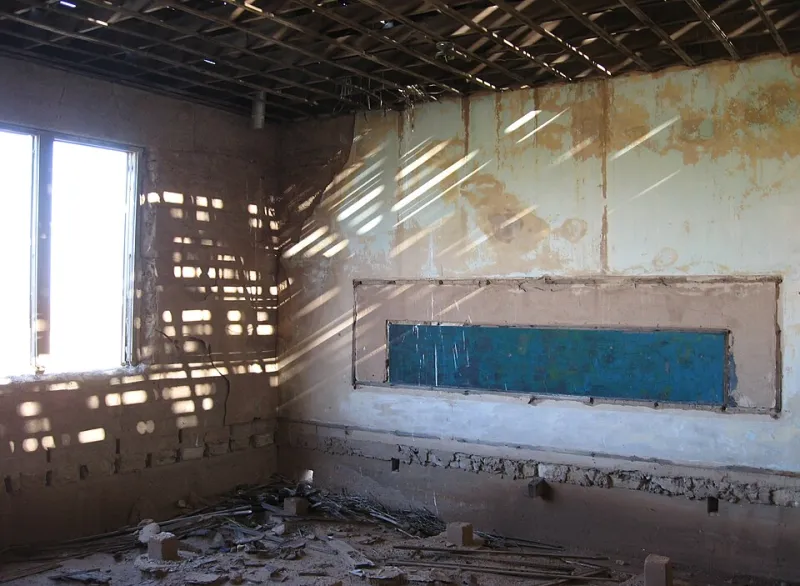
Photo: Wordbuilder, CC BY 3.0, via Wikimedia Commons
Ask any teacher in the capital about the cold and you will rarely hear about January snow. You will hear about the classroom that never warms up before registration. About coats staying on until morning break. And then, paradoxically, about corridors radiating heat at six in the evening, long after the last after-school club has packed away.
This is the scheduling mismatch at the heart of London's educational estate: heating systems programmed around a school day that, in many buildings, no longer exists.
A Programme Written in the 1950s
Much of London's school stock dates from the post-war building boom, and so too does the logic of its heating. Legacy systems were designed around a simple rhythm — a single warm-up period before morning assembly, a steady burn through the day, and a shutdown by late afternoon. The timer was set once, perhaps by a caretaker decades ago, and left alone.
The trouble is that the modern school day bears little resemblance to that rhythm. Breakfast clubs begin at 7.30am. Wraparound care runs until 6pm. Halls are let out to community groups at weekends. Yet in a surprising number of schools, the heating controller still follows a schedule that assumes everyone leaves at 3.30pm sharp.
The result is a double failure: cold bodies during occupied hours, and warm empty rooms afterwards.
The Nervous Site Manager Problem
It would be easy to blame outdated equipment alone, but the human element matters just as much. In our work across London schools, we regularly meet site managers who are deeply cautious about touching heating controls — and understandably so.
A cold classroom generates complaints within minutes. A boiler that fails to fire on a frosty morning can close a school. Faced with that asymmetry of risk, many caretakers adopt a simple policy: leave everything on, just in case. Better a warm empty hall than an angry phone call from a parent.
The financial consequences are quietly enormous. A typical secondary school can spend tens of thousands of pounds on heating each year, and industry estimates suggest that between 20 and 30 per cent of that energy is consumed when buildings are largely unoccupied. Across a local authority estate of a hundred schools, that is a seven-figure sum — money that buys nothing but peace of mind.
Grants Without Strategy
Successive government schemes have poured funding into replacing ageing school boilers, and rightly so — many of the units we encounter are decades old and limping along on borrowed time. But a new boiler connected to a 1950s control regime is rather like fitting a precision engine to a cart with square wheels.
We have visited schools where a brand-new, highly efficient plant was installed over a summer holiday, only for the heating pattern to remain identical to the one it replaced. The efficiency gains existed on paper and nowhere else. Without matching controls — zoning, optimisation, occupancy scheduling — the capital investment delivers a fraction of its potential.
A Practical Roadmap for Tight Budgets
The encouraging news is that fixing a school's heating schedule rarely requires wholesale replacement. In our experience, a staged approach works best.
Start with a survey of actual use. Map when each part of the building is genuinely occupied — including breakfast clubs, lettings, exam periods and INSET days. Most schools are surprised by how much variation exists across the week.
Introduce zoning where the building allows. Halls, kitchens, sports facilities and classroom blocks all have different occupancy patterns. Even splitting a school into two or three independently controlled zones can dramatically reduce waste.
Fit weather compensation and optimum start controls. These adjust warm-up times based on outdoor temperature, so the heating comes on late on mild mornings and earlier only when genuinely needed. They are inexpensive relative to their impact.
Give the site manager confidence. Training matters as much as hardware. A site manager who understands the system, and who has a support contract behind them, will make far better decisions than one operating out of fear.
Review annually. School timetables change. Heating schedules should change with them.
Warm Rooms Where the Children Actually Are
There is also a wellbeing dimension that goes beyond energy bills. Research consistently links cold classrooms to reduced concentration and higher absence. Getting the schedule right is not merely an accounting exercise — it is an educational one.
London's schools have some of the most varied and intensively used buildings in the country. Their heating should reflect that. With modest investment in controls, honest scheduling, and a little confidence behind the plant room door, the four o'clock problem — warm corridors, cold classrooms — can be consigned to the past.
If your school's heating seems to operate on a timetable nobody remembers setting, it probably does. A controls review is the most cost-effective hour a bursar can spend this year.