Glass, Gloss and Guesswork: The Climate Problem Lurking Behind London's Luxury Penthouse Doors
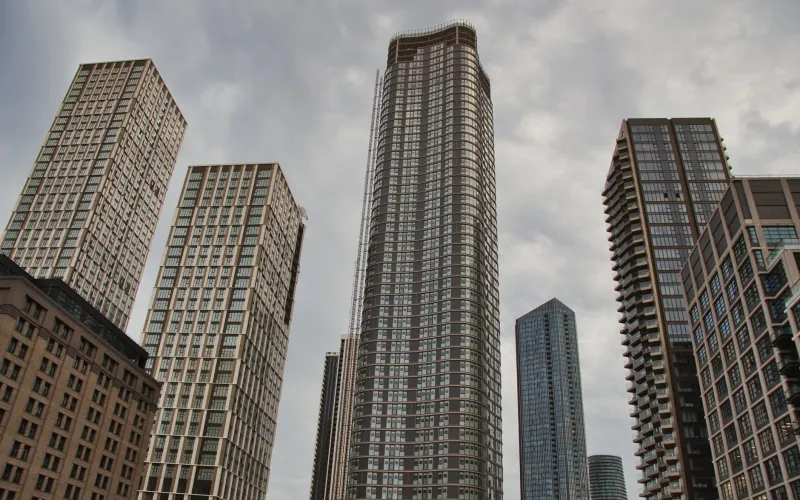
From the outside, a penthouse above the Thames represents the pinnacle of London living: floor-to-ceiling glazing, skyline views, and a price per square metre that rivals Mayfair freeholds. From the inside, however, many of these apartments become uncomfortably hot by late spring, stuffy by July, and stubbornly difficult to keep warm evenly in January. It is a paradox familiar to anyone working in residential climate control across the capital — the more expensive the flat, the more likely it is to have a temperature problem.
The Glass Factor
The defining feature of the modern luxury penthouse is also its greatest thermal liability. Expansive glazing, often stretching from floor to ceiling on multiple elevations, turns the interior into a greenhouse. Solar gain through south- and west-facing glass can raise internal temperatures by several degrees within hours on a sunny afternoon — even in April or October.
Building regulations in England do impose limits on solar overheating, but compliance is frequently demonstrated through modelling rather than lived experience. A design that passes on paper in a simulation can still produce a flat that hits 27°C on a mild spring day, particularly when blinds are the only mitigation offered. The view, after all, is the selling point; nobody wants to live behind permanent solar film and closed shutters.
Developer Priorities Stop at Handover
The second issue is structural to the way new-build developments are sold. The heating, ventilation and air conditioning systems in most London high-rise residential schemes are specified by the developer, installed by the main contractor, and handed over with minimal engagement from the people who will actually live with them. There is rarely a dedicated resident on the other side of the table asking practical questions: How is the apartment cooled in a heatwave? Who services the fan coil units? What happens when the communal riser fails?
The result is often a system that is technically adequate but poorly configured — cooling circuits unbalanced, thermostats sited in awkward positions, ventilation rates set to minimum compliance. Residents inherit equipment they did not choose, with documentation they may never have seen.
The Maintenance Gap
Perhaps the most overlooked issue is servicing. In a well-run block, fan coil units, heat recovery ventilation systems and communal plant should be inspected and maintained on a regular schedule. In practice, many developments treat climate systems as invisible infrastructure — something nobody thinks about until a resident complains that their flat won't drop below 26°C.
Blocked filters, fouled coils and poorly calibrated controls degrade performance gradually. A penthouse that was comfortable in year one can become a persistent source of frustration by year four, with no obvious single fault to point to. By the time someone calls an engineer, the system may need a full recommissioning rather than a simple repair.
What Residents Can Actually Do
The good news is that most penthouse climate problems are solvable, provided the underlying equipment is sound. The starting point is an honest assessment: airflow measurements, control settings, filter condition and a thermal review of how the apartment behaves across the day. From there, targeted interventions — rebalancing air distribution, reprogramming control schedules, upgrading filtration, or supplementing with properly specified cooling — can transform year-round comfort without compromising the architecture.
For residents of managed blocks, it is also worth pressing managing agents on the servicing record. Communal plant and in-unit systems alike deserve documented maintenance, and residents have every right to ask for it.
London's penthouses promise effortless living. With the right attention, the climate inside them can finally match the view.