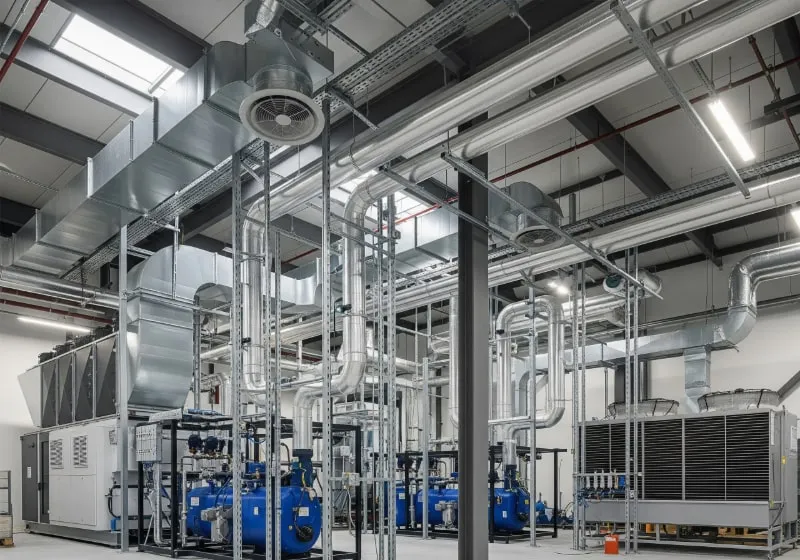
What Separates a Good HVAC Installation from a Great One? The Answer Lies in the Gas
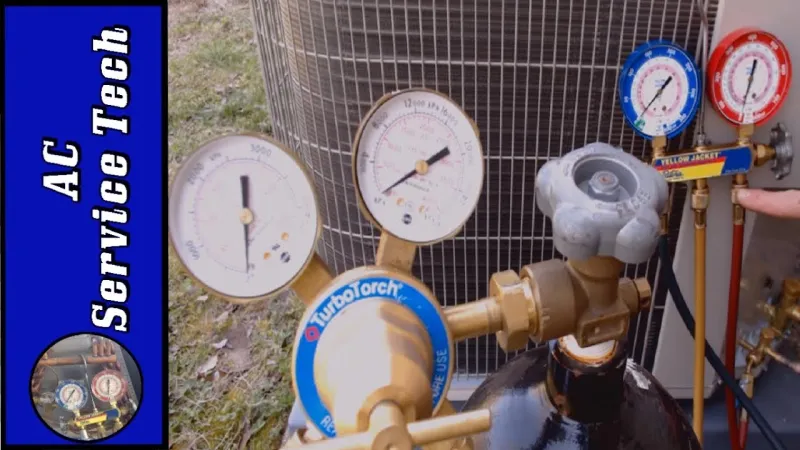
Photo: HVAC technician commissioning commercial air conditioning system nitrogen pressure testing London office building, via i.ytimg.com
The Invisible Variable That Defines System Performance
When a facilities manager signs off on a new HVAC installation, the visible elements tend to dominate the conversation — unit placement, pipework routing, energy ratings, and projected running costs. What rarely features in those discussions is the commissioning methodology used to prepare the refrigerant circuit before the system is ever switched on. Yet it is precisely here, in the unglamorous final stages of installation, that the long-term fate of the system is often decided.
Nitrogen-assisted evacuation and commissioning has become the defining practice that separates elite HVAC installations from those that merely meet the minimum standard. Its adoption is not universal. Many contractors, particularly those competing on price rather than quality, omit or abbreviate the process entirely. The consequences of that decision tend to surface months or years later — in the form of compressor failures, efficiency degradation, and maintenance costs that erode the original value of the investment.
What Nitrogen Actually Does in an HVAC System
To understand why nitrogen matters, it helps to understand what it is replacing. When refrigerant pipework is assembled on site, it is exposed to the atmosphere. Air carries moisture. Moisture, even in trace quantities, is destructive inside a refrigerant circuit. It reacts with refrigerant and compressor oil to form acids, creates ice crystals at expansion valves, and accelerates internal corrosion across every component the circuit touches.
Nitrogen is an inert, dry gas. When used to purge and pressurise refrigerant lines prior to evacuation, it displaces atmospheric air and the moisture it carries. The pipework is then evacuated using a vacuum pump — but crucially, a nitrogen purge prior to evacuation dramatically reduces the residual moisture burden that the vacuum alone must contend with. The result is a circuit that is genuinely clean and dry before refrigerant is ever introduced.
Beyond moisture removal, nitrogen pressure testing serves as a rigorous leak detection protocol. A system held at pressure with dry nitrogen will reveal micro-leaks that would otherwise go undetected during a standard visual inspection. Identifying and rectifying those leaks before commissioning is complete prevents refrigerant loss, maintains system efficiency, and avoids the environmental and regulatory implications of uncontrolled refrigerant release — a consideration of increasing relevance under current UK F-Gas regulations.
Why London's Built Environment Makes This More Critical, Not Less
London presents a particular set of challenges for HVAC installations. The city's older commercial stock — Georgian townhouses converted to offices, post-war concrete blocks, Victorian warehouses repurposed as creative studios — often involves complex pipework runs through confined spaces, long refrigerant line lengths, and difficult access for ongoing maintenance. These conditions amplify the consequences of substandard commissioning.
A long refrigerant line run, for example, retains more atmospheric air during assembly than a compact domestic installation. The moisture load introduced at the point of installation is proportionally greater. In a building where the plant room is three floors below the air handling units, rectifying a compressor failure caused by acid contamination is not a routine call-out. It is a significant undertaking with real implications for business continuity.
London's climate adds another layer of complexity. The city's increasingly humid summers — a trend that has become impossible to ignore over the past decade — mean that pipework assembled during warm, damp conditions carries a higher moisture risk than work completed in drier months. Contractors who apply nitrogen protocols consistently, regardless of season or site conditions, deliver a more predictable and reliable outcome.
Case Evidence from London's Commercial Sector
The measurable impact of nitrogen commissioning protocols is not theoretical. Across London's commercial buildings, the evidence accumulates in maintenance records, energy consumption data, and compressor replacement frequencies.
In one mid-sized office building in the City, a multi-split system installed without rigorous nitrogen purging required compressor replacement within 26 months of commissioning. Analysis of the failed component revealed acid contamination consistent with moisture ingress during installation. The replacement cost, combined with the disruption to tenants during the summer period, significantly exceeded the saving made by selecting the lower-cost contractor in the first instance.
By contrast, a comparable installation in a Canary Wharf commercial property — where nitrogen commissioning protocols were specified by the building's mechanical and electrical consultant and independently verified — completed its fifth year of operation without a single refrigerant-related fault. Compressor oil samples taken at the third-year service showed no signs of acidification. Energy consumption had remained within three per cent of the commissioning baseline.
These are not exceptional outcomes. They represent the normal performance differential between installations that take commissioning seriously and those that treat it as a formality.
What Facilities Managers Should Be Asking
For those responsible for commercial buildings across London — whether managing a single office floor or overseeing a multi-site estate — the nitrogen commissioning question is worth raising explicitly with any contractor being considered for an HVAC installation or significant system upgrade.
Specifically, it is worth asking whether the contractor's commissioning procedure includes a nitrogen purge prior to evacuation, whether pressure testing is conducted with dry nitrogen and held for a defined period before refrigerant charge, and whether the commissioning record documents the vacuum level achieved and the duration for which it was maintained. Contractors who have nothing to hide will answer these questions without hesitation. Those who deflect or become vague are, in effect, answering the question differently.
It is also worth noting that nitrogen commissioning is not a premium add-on in the sense of being optional for those with larger budgets. It is the correct way to commission a refrigerant-based system. The fact that it is not universally practised reflects competitive pressures in the installation market rather than any genuine debate about its technical merits.
The Long View on Installation Quality
Commercial HVAC systems represent substantial capital investments. A well-specified, properly commissioned system installed in a London office building today should deliver fifteen to twenty years of reliable service with appropriate maintenance. The decisions made during commissioning — invisible to the building owner, rarely documented in the sales process — have an outsized influence on whether that lifespan is achieved.
Nitrogen-assisted commissioning is not a novelty or a marketing distinction. It is the technical foundation upon which long-term system performance is built. For London's building owners and facilities managers, understanding this distinction is not a specialist concern. It is essential due diligence.